
I'm currently working on a set of automations for a mid-sized grantmaker.
One of the challenges they had was their open funding calls. Each round brings in around 200 applications, and that means two weeks of someone reading and sifting by hand before the real work even starts.
Here's what I built for them
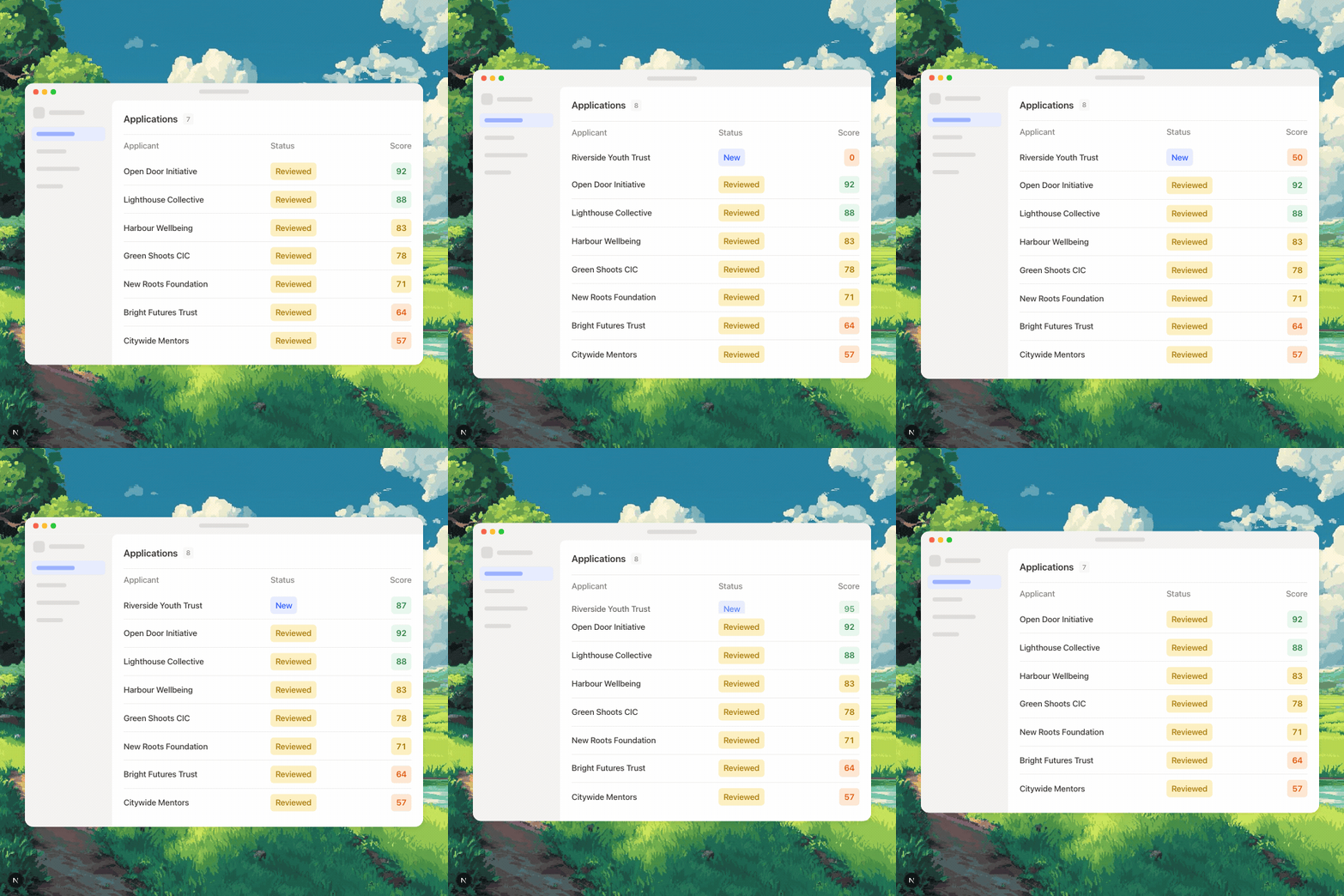
An assistant that reads every application as it arrives, scores it against their own criteria, and hands the team a ranked shortlist with a one-paragraph summary on each.
How it works
Applications land through a form. An AI assistant reads each one, scores it against their published criteria, and writes a one-paragraph plain summary. Then it drops a ranked table in front of the team, with the best matches at the top. The decisions stay human. The assistant shortlists, but does not decide.
How I built it
- We started with the criteria. We wrote one plain doc of what a strong application looks like for them: the eligibility rules, the things they weigh heavily, the things that rule someone out. The assistant reads this file to score, so this is where their judgment lives.
- We collected applications through a form (we used Notion Forms; Google Forms is also great for this). One question per criterion, where possible, so the answers arrive structured and comparable rather than buried in a long document.
- We set up one home for the data (we used Notion, but a Google Sheet does the same job). Every application becomes a row. This is the table the assistant fills in, and the team reads from.
- We connected the form to the table so each submission creates a new row. Nobody copies anything across by hand.
- We added the AI assistant (we used Claude) to read each application. We pointed it at the criteria doc and had it give every application a score against each criterion, plus an overall score.
- We had it write a one-paragraph summary for each one, in plain language: who they are, what they're working on, and why they scored the way they did. This is what saves the reading.
- We sorted the table by the overall score so the strongest applications sit at the top. Now the team opens one ranked list instead of 200 separate documents.
- We set it to run on its own. Every time a new application is added to the form, it is automatically read, scored and summarised, so the work happens as applications arrive, not in one panicked sweep when the call closes.
- We kept a human review step, always. The team reads the top of the ranked list and makes the calls. The assistant never approves or rejects anyone.
What I learned building it
The criteria doc does most of the work. A vague brief gives you a vague ranking. The more honestly the team wrote down what they actually back and what they quietly pass on, the more the scores matched what they would have decided by hand.
Keep the human rule strict. It is tempting to let the top score auto-advance once the ranking looks good, but this is a judgment call, and you should have a real person doing final review.
The one-paragraph summary is the win. The score tells you where to look, but the plain summary lets someone glance at row 14 and understand it in 10 seconds.
Tools
If your organisation sifts through a stack of anything each round, applications, submissions, nominations, this is worth setting up.